SONIFICATION
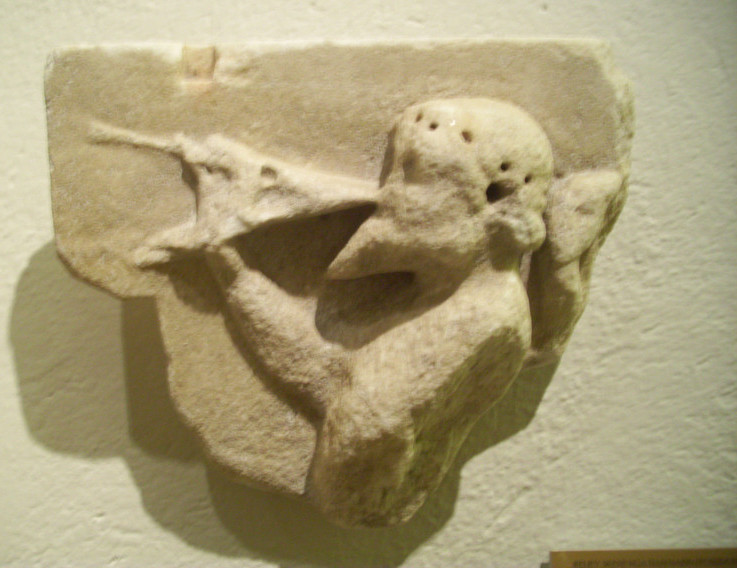 An aulos player, found in Apollonia, Albania
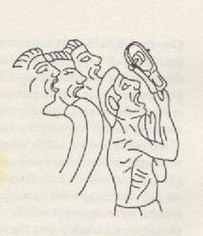 A man with a sistrum and three comrades, all singing and chanting
If you want to contact me, please use the email address below:
enokoco1@hotmail.com

Baud-Bovy was an excellent observer of the multipart singing, poetic rhythm and the existence of a common repertory among the Greeks and the Albanians. Songs of the north of Epirus, points out Baud-Bovy, are an exceptional phenomenon in the Greek repertoire in that they feature a strange polyphony comprising the two soloist voices and the third, a drone. This ‘is a characteristic of the men’s songs of the Cham people recorded by Mr. and Mrs. Stockmann. We can be certain that the above actually originated from Albania and were adopted by the Greeks, given that both peoples had lived for long periods in close cultural symbiosis’ (Baud-Bovy 1972, 158). The pentatonic system or the pentatonic modes, applied in both multipart singing and monodic singing of the Southwest Balkans, are those
01-'Baud-Bovy', Tbilisi paper 2016.doc
Microsoft Word document [644.5 KB]

In the second half of the 19th century and mostly around the beginning of the 20th, apart from the Korçë traditional songs mostly of a pentatonic melodic organisation, as well as rural and stylised urban songs, a distinctive type of song was developed in Albania; Kënga Karakteristike Korçare (KKK), the songs of the Korçë area.
Kënga Karakteristike Korçare.docx
Microsoft Word document [19.4 MB]
The Saze semi-professional ensembles are spread throughout the South and South East of Albania, particularly in the Korçë area, and extend to Epirus, northern Greece. Some of the most renowned Saze groups were made up of family members since musical talent seemed to be a genetic requisite in these families. Thanks to their ability for ‘freeing’ music from local, ethnic or national ideas, the wandering Saze musicians adapted parts of the national heritage to their taste and styles and stored them in their own idiomatic repertoire. The ‘wandering’ way of life which the Saze-s represented, facilitated them in enriching their repertoire with characteristics of the various ethnic groups.
The Saze Instrumental Ensembles of South[...]
Microsoft Word document [24.8 KB]
Kosta Manojlović was a Serbian composer, musicologist, choral conductor, folklorist and educator, who in the mid-1930s harmonised and arranged for mixed choirs and solo voices several Albanian choral songs. He published them in 1933 as a collection of choral songs based on traditional and urban songs from Albania and titled it 'The Songs from the Land of Skenderbeg' (Alb. Këngë të tokës së Skënderbeut/ Serb. Песме земље Скендербегове).
Kosta Manojlović.docx
Microsoft Word document [45.6 MB]
Thoma Nassi, who arrived from America in 1920 with his band as volunteers to help Albania, significantly enriched musical activity in Korçë. Although his contribution to Albanian musical life was unique, he was not regarded favourably by the post–war regime in Albania; his vocal and instrumental works were not performed, his musical activities as conductor and composer were not discussed. In short, he was never given the credit he deserved as an art composer, as one of the first to introduce Western musical culture into Korçë, Albania.
Thoma Nassi.docx
Microsoft Word document [38.4 KB]
At the beginning of the 18th century, there was a growing interest in representing Scanderbeg on the operatic stage. Some well-known composers of baroque music began to place a greater emphasis on music’s dramatic power to elicit emotional response. The sense of drama was also incorporated into the vocal forms such as opera. In the list of rarely performed compositions, separate and specific arias and overtures have been recorded more often, including Antonio Vivaldi's opera Scanderbeg and Rebel and Francoeur’s opera also titled Scanderbeg. More about these two operas below.
The fact that Scanderbeg led his people against the Ottomans in defence of his country and the region as well as his conversion to Catholicism, was welcomed by ‘Christian Europe’, which considered him a key nat
SCANDERBEG IN MUSIC.docx
Microsoft Word document [5.5 MB]
The Aromanian Vlach Styles of Iso(n)-bas[...]
Microsoft Word document [34.4 KB]
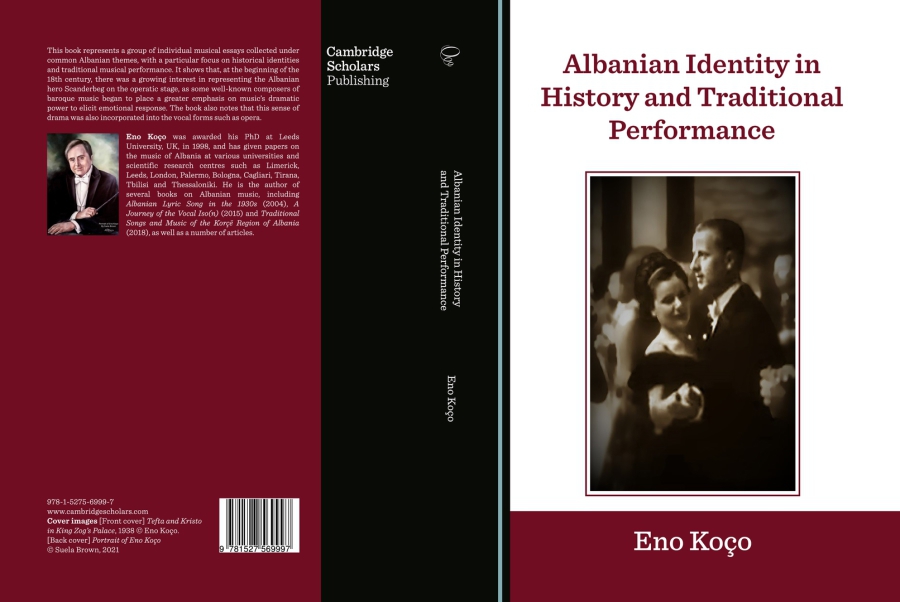
This book represents a group of individual musical essays collected under common Albanian themes: historical identities and traditional music performance. It starts with the extended essay called ‘Scanderbeg in Music’, which is an independent, self-directed piece of research. At the beginning of the 18th century, there was a growing interest in representing Scanderbeg on the operatic stage. Some well-known composers of baroque music began to place a greater emphasis on music’s dramatic power to elicit emotional response. The sense of drama was also incorporated into the vocal forms such as opera. In the list of rarely performed compositions, separate and specific arias and overtures have been recorded more often, including Antonio Vivaldi's opera Scanderbeg and Rebel and Francoeur’s opera also titled Scanderbeg.
Fan Noli’s interest in music began at an early age by attending church services as music was essential to the service of the Orthodox Church. In later years Noli became well known for founding the Albanian Orthodox Church in Boston, USA in 1908. He is recognised for his translations into Albanian, mostly based upon hymns drawn from both the Slavonic and Byzantine choral traditions. His permanent work with choral music made remarkable progress with the aim of creating a form of Albanian singing in church inspired by the tradition of Russian choral music. Over the years, Noli's attention would shift the boundaries of ecclesiastical music to enter the world of classical music, initially for the sheer pleasure of it and later to focus specifically on the art of composing and music theory research. While studying at the New England Conservatory of Music (Boston) in the 1930s, Noli composed several orchestral and vocal works. As his works were composed in America in 1937 and 1938, there was no time for them to be known to Albanian audiences, then WWII started and after which a totalitarian system of government instated in Albania.
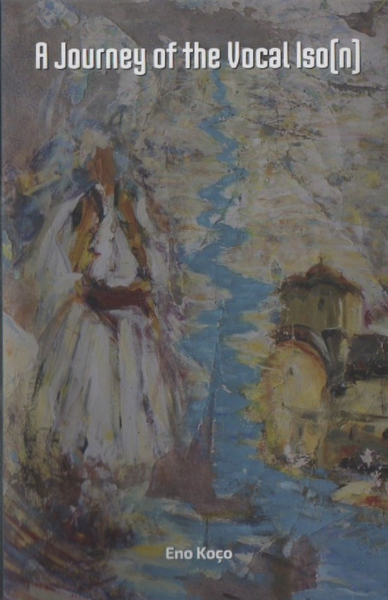
This study is concerned with the vocal iso(n) repertory, used, on the one hand, in the oral traditions of the multipart unaccompanied singing (IMUS) of the Southwest Balkans, or, more specifically, South Albania, North Epirus in Greece and a small part of the Republic of Macedonia (FYROM), and on the other hand in Byzantine chanting. The vocal iso(n) is an important component of these traditions, which are still practised today in the Southwest Balkans region. The study presents evidence on various manifestations of the practice in their particular geographical regions, and examines in detail the historical roots of these traditions. An ison, a drone holding-note, is the voice that provides the drone in Byzantine chanting. This chant is part of the liturgical music of the Orthodox Churches, in contrast to the IMUS, which has developed as a secular repertory. The Byzantine liturgical singing of the Arbëresh Diaspora of South Italy and Sicily, which has been passed down orally from the 15th century to the present day, as well as non-liturgical singing, is also explored in this book. The three unaccompanied forms of singing, two of which use the ison (IMUS and Byzantine chanting) and the third, the Arbëresh, which does not (with some exceptions in recent times), are analysed in separate sections of the book. Unlike many studies of similar subject matter, which suffer from a one-sided point of view because of national bias, this book is multifaceted and even-handed. While multipart singing in Albania is usually considered to be a solely Albanian phenomenon, in Greece, it is thought of as being Greek. In fact, the multipart singing of the Albanian and Greek, as well as Aromanian and some Slavic populations is more intrinsically bound to the region than to any ethnic group. The distinct sound of iso(n) singing echoes the internal and external historic influences of the region, interwoven with the complex modal idioms.
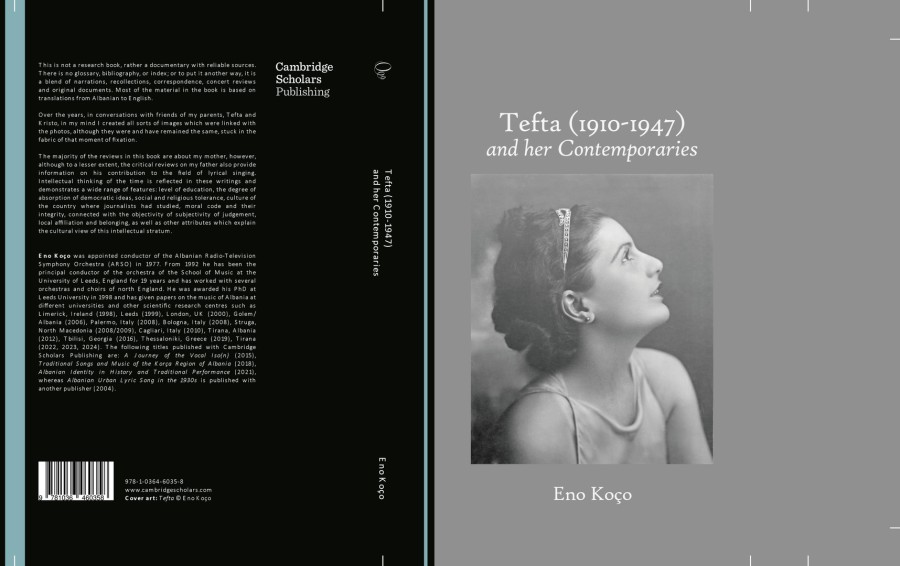
This is not a research book, rather a documentary with reliable sources. There is no glossary, bibliography, or index; or to put it another way, it is a blend of narrations, recollections, correspondence, concert reviews and original documents. Most of the material in the book is based on translations from Albanian to English. Over the years, in conversations with friends of my parents, Tefta and Kristo, in my mind I created all sorts of images which were linked with the photos, although they were and have remained the same, stuck in the fabric of that moment of fixation.The majority of the reviews in this book are about my mother, however, although to a lesser extent, the critical reviews on my father also provide information on his contribution to the field of lyrical singing. Intellectual thinking of the time is reflected in these writings and demonstrates a wide range of features: level of education, the degree of absorption of democratic ideas, social and religious tolerance, culture of the country where journalists had studied, moral code and their integrity, connected with the objectivity of subjectivity of judgement, local affiliation and belonging, as well as other attributes which explain the cultural view of this intellectual stratum.

This article concerns the effect of the communist totalitarian system on two great artists: Dmitri Shostakovich, who lived under Soviet rule before and after the Second World War, and the Albanian author Ismail Kadaré, whose career developed over the last 40 years of the 20th century. In this context readers may need to be reminded of the remarkable isolation of Albania during the post-war communist regime; and it is also worth recalling that most composers throughout the ages have encountered some form of artistic constraint – consider, for example, Bach, Haydn and Beethoven, each of whom had to compose some of their works to order, however benevolent their patrons. The constraints imposed by communist regimes were an extreme example of this master-servant relationship, although one mu
Shostakovich Kadare.pdf
Adobe Acrobat document [95.7 KB]
Albanian Popular Song (Kënga popullore shqiptare) is the most prominent of Albanian musical genres. In Albania the term popullore (popular), which is closer to the Italian popolare or the Russian narodnaya, is used in a broad sense to embrace the music that, with the growth of the towns from the eighteenth century onwards, began to develop distinctive characteristics which tended to be accepted by most Albanians. Kënga popullore (popular song) is employed as a general and common term, and not one that implies a cultural context that is more American or modern. Kënga popullore is also, after all, part of the folk–song of Albania. The repertories covered by popullore song embrace not only urban and rural songs, but also gypsy song and sometimes elaborated folk music. If the oral folk music traditions are, more or less, restricted to their immediate geographical areas, the popullore song or music has a wider range. By concentrating on ‘lyric’ I hope to isolate a particular aspect of the performing and oral history of the repertory, by which it was developed into something akin to the art song. Because this type of song falls somewhere between the repertories normally studied (which incline to art-music or to allegedly ‘purer’ forms of folk music), this is an area which has not previously received much attention.
The Jare is a type of urban song very characteristic of the town of Shkodër and is distinguished from other urban songs by its unique elaborated form. In the central Albanian towns of Elbasan and Berat, as the main centres also of the Middle Eastern urban culture, urban song developed by other means. Because it is situated just north of the river Shkumbin, the population of Elbasan belongs to the northern Geg ethnic and linguistic group. Isuf Myzyri of Elbasan played a leading role in central Albania. He developed his career as a traditional violinist and urban composer in the period between the two World Wars. Some of his melodies were influenced by a Middle Eastern kind of sentimentality, however, his inspiration and intuition, softness and pensiveness, make his songs sound on the one hand very personal and on the other, affectionate.
Another important centre is Korçë in southeastern Albania, where urban songs have a character all of their own and their origin is still somewhat mysterious. In Korçë it is assumed that some of these elegant songs—as they are commonly viewed—probably came from Ali Pasha’s Palace in Janina but, whatever their exact origin, they faithfully reflect some of the most modal typical characteristics of the Korçë district. Thus, the popular songs of the Korçë area represent the heart of that modal idiom defined as the south-western Balkan mode. The melodic pentatonic nucleus of these songs produced the foundation, not only for the multipart singing, but also for the monodic singing of the South Albania. Although a monodic song emerged as a univocal genus, it contained in itself elements of individual parts of multipart singing, however, in a horizontal or linear form. From a monodic tune, in its linear version, other parts could be extracted in order to shape a multipart rendering of two, three or four voices. The reverse could also happen; a multipart song could be adapted to a linear monodic rendering, incorporating in the song’s corpus ‘contrapuntal’ features and being presented as a single line melodic contour with an anhemitonic pentatonic spectrum. The monodic singing of South Albania has clearly absorbed the most contemporary features of popular singing; songs sung by Eli Fara from Korçë, accompanied by the Saze group, are a good example of the popularisation of traditional monodic song that puts it closer to the taste of the modern urban milieu. This new genre of popular music is marketed by live, amplified shows, recordings and broadcasting.
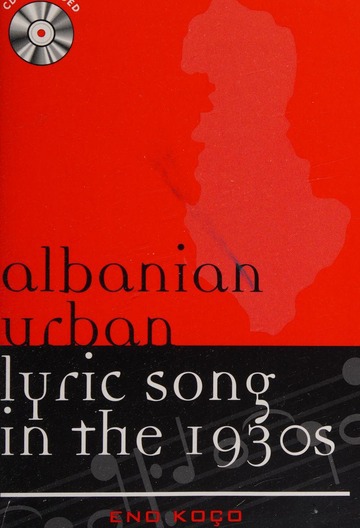
Albanian urban lyric song in the 1930s refers to the "golden age" of a unique musical tradition that flourished in the early 20th century and reached its peak in the 1930s.. It is a genre of written, composed songs that became more widespread through recording, with composers and lyricists developing Western-style vocal and instrumental music from urban folk roots. The genre is documented in the book Albanian Urban Lyric Song in the 1930s.
This study is concerned with the vocal iso(n) repertory, used, on the one hand, in the oral traditions of the multipart unaccompanied singing (IMUS) of the south-west Balkans or more specifically south Albania, north Greece and a small part of North Macedonia, and on the other hand in Byzantine chant. The vocal iso(n) is an important component of these traditions, which are still practiced today in the south-west Balkan area. The paper attempts to present evidence on various manifestations of the practice in their particular geographical regions and to further determine the historical roots of these traditions.
An ison, a drone holding-note, comes from the Greek and is the voice that provides the drone in a Byzantine chant (Eastern Christian Chant). The latter is the liturgical music of the Orthodox Churches, whereas the IMUS has developed as a secular repertory. In Albanian, the same word for the same function in the oral traditional IMUS is spelt iso. Both versions of the spelling will be used throughout this survey, ison in the sense of the Byzantine chant and iso to refer to the south Albanian IMUS. An intermediate form of spelling with the use of brackets, iso(n) will also be used in order to characterise a liaison between the two linguistic forms. In both types the iso was never written down, but in Byzantine ecclesiastical chants the ison is a written neume, the earliest scored records of which can be found only from the beginning of the 19th century. The vocal iso(n), as the tonal foundation of the singing and a constant reference tone for the soloists’ melodic phrases, is widely practiced today in some pockets of the north–eastern Mediterranean.
The research aims also to study the relationship, if any, between secular and religious practices, that is the iso(n) used in the oral traditions of the IMUS and that of the Byzantine Chant. The former vocal iso repertory is broadly used in the multipart (two- and three-part) singing with iso of the rural and urban areas of the south-west Balkans and is profane, whereas the latter is widely practiced today in Byzantine churches all over the world. The Byzantine liturgical singing of the Arbëresh Diaspora of south Italy and Sicily, which has been passed down orally from the 15th century to the present day, as well as non-liturgical singing, will also be discussed here. The three unaccompanied forms of singing, two of which use the ison (the IMUS and the Byzantine chant) and the third, the Arbëresh, which does not, will be analysed separately, then comparisons will be made at the end.
 Print
Print 