Maestro Koço,
I recently came across Albanian Identity in History and Traditional Performance and was genuinely struck by the scholarly depth and cultural urgency of the work. The way you have gathered individual
essays tracing how Albanian national identity has been performed, preserved, and structurally broadcast through centuries of composition, including the exhaustive study of Scanderbeg in Music, which
breaks down how early 18th-century Baroque opera composers weaponized the dramatic legend of the Albanian national hero on the operatic stage, offers a vital and essential contribution to
ethnomusicology, cultural history, and the study of national identity through performance. The focus on how distinct vocal inflections of traditional Albanian singers break free from the standard
tempered constraints of modern Western staff notation makes for a compelling and rigorously researched read.
I have also been looking at how the book is positioned in the broader musicological and cultural history landscape and noticed something worth exploring.
That is a good question to consider, especially for a work that offers such a vital connection between historical performance traditions and contemporary cultural preservation.
What tends to happen with deeply rigorous, academically important works like yours is that they become essential reading within their primary scholarly ecosystem, ethnomusicology programs, Balkan
studies courses, and music history seminars, but do not always reach the wider audience of classical musicians, opera lovers, cultural historians, and general readers interested in the intersection
of music, identity, and national survival who could also benefit from the material. Your work as a conductor, as Principal Conductor of the Albanian Radio-Television Symphony Orchestra, as a
musicologist, and as an external academician of the Academy of Sciences of Albania shows you understand the importance of scientifically documenting and preserving the distinct identity of Albanian
vocal traditions, yet the significant commercial and impact challenge is that the book's structure as a collection of independent research essays, combined with its premium academic pricing and
specialized framing, can restrict discoverability beyond university library and research networks.
I am particularly struck by the tension between the individual essays and the overarching narrative that could unite them. The study of Scanderbeg in Music is fascinating on its own, and the analysis
of traditional vocal techniques is equally valuable. Yet because the chapters jump abruptly from 18th-century Baroque operatic stages in Western Europe to 20th-century rural vocal technique, the book
lacks a continuous narrative spine that could carry a general reader through the entire text. A reader picking up the book for the story of how Albanian music survived centuries of invasion might
read the Scanderbeg chapter and then skip to the sections on traditional vocal technique, but they may not feel compelled to read the book from cover to cover because the episodic structure does not
build momentum.
I have been looking at how works of ethnomusicology and cultural history navigate the tension between scholarly rigor and narrative accessibility, and I noticed something I wanted to ask you about.
The most successful crossover works in this field often find ways to weave their research into a continuous, compelling narrative that carries the reader from beginning to end. I wonder whether you
have considered restructuring the material into a unified chronological narrative for a future edition, or whether you see the essay format as the best vehicle for presenting this research.
I am also curious about your perspective on how the book has been received by different audiences. Have you found that the book is reaching the wider audience of classical musicians, opera lovers,
and cultural historians you might hope to connect with, or does it remain primarily within academic ethnomusicology circles? And do you see opportunities to extend its reach through digital
platforms, audio companions, or alternative formats?
I am also interested in the possibility of an audio companion to the text. The book discusses specific vocal inflections and traditional singing techniques that break free from standard Western
notation. For a reader who is not already familiar with these traditions, the written descriptions can only convey so much. I wonder whether you have considered incorporating audio examples, whether
through scannable QR codes linking to recordings, a companion website, or an audio appendix, to allow readers to hear the sounds you are describing as they read. This would not only deepen their
understanding but could also significantly expand the book's appeal to a broader audience.
I ask because I think your work offers something that is increasingly rare in contemporary ethnomusicology: a deep, authoritative account of how music functions as a shield for national survival,
written by a scholar who is also a master conductor with direct experience performing and preserving these traditions. That is a message that deserves to reach beyond university libraries. The
challenge, as I see it, is how to make the richness of your research accessible to a wider audience of musicians, music lovers, and cultural historians without compromising its scholarly
integrity.
I would be genuinely interested to hear your perspective on whether you see the book reaching the audiences you intended, or whether there are other groups you hope to connect with. Have you found
that the book is being discovered by musicians, conductors, or opera enthusiasts outside of academic circles? And do you see opportunities to extend its reach through audio companions, digital
platforms, or partnerships with cultural institutions?
Lloyd Hamilton
Co-Admin, The Book You Like Most (Top 100 Goodreads Group)
--
—
Lioyd Hamilton
Author Visibility Strategist & Community Steward
Co-Admin, The Book You Like Most (Top 100 Goodreads Group | 49.7k Members)
I help under-discovered books find the readers who are already searching for them.
My work sits at the intersection of community curation and discoverability architecture.
Through The Book You Like Most a Top 100 Goodreads community of 49,785 readers I place
books of depth and transformation into organic conversations where they're actually seen.
lioydhamilton.lovable.app |
info.lioydhamiton@gmail.com |
https://www.goodreads.com/group/show/1219146-the-book-you-like-most
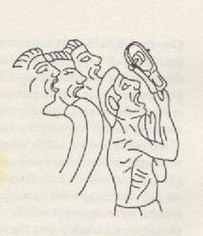 A man with a sistrum and three comrades, all singing and chanting
 Print
Print 